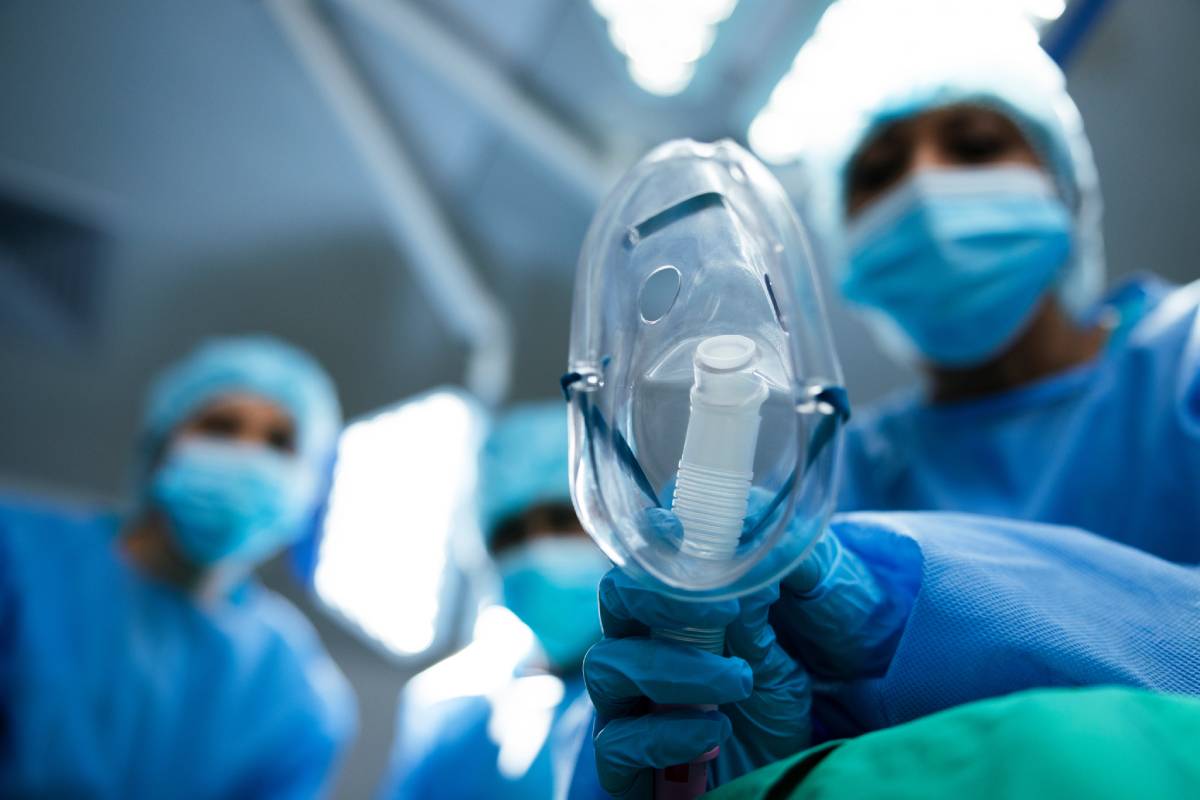
Beyond the risks directly related to inhalational anesthesia, inhalational risks in the operating room (OR) present an important and underrecognized concern for healthcare personnel, and their significance continues to evolve as modern surgery becomes more complex. Apart from the intended intraoperative effects of volatile anesthesia, scattered evidence indicates that airflow leaks, scavenging inefficiencies, surgical smoke, and other airborne contaminants may pose both acute and chronic inhalational health risks to OR staff.
Occupational exposure to “waste anesthetic gases”—that is, the portion of inhalational anesthetics (such as desflurane, sevoflurane, isoflurane or nitrous oxide) which escape into the ambient operating suite rather than being properly scavenged—remains the primary mechanism of concern. Regulatory bodies note that more than two hundred thousand healthcare professionals (including anesthesiologists, OR nurses, recovery room staff and even veterinary clinics) may be exposed to such gases. Acute symptoms documented in some exposed workers include headaches, fatigue, dizziness, irritability, impaired concentration or coordination, and nausea. More concerning are possible chronic effects: some epidemiologic and biomonitoring studies suggest associations with reproductive effects (infertility, miscarriage), genotoxicity, altered renal or hepatic function, and increased DNA breaks in peripheral blood cells.
Beyond anesthetic gas leakage, the surgical environment introduces additional inhalational hazards, notably surgical smoke and volatile compounds released during electrocautery, laser ablation, tissue vaporization, or adjunctive procedures. Surgical smoke has been shown to contain numerous chemical species including ultrafine particulate matter, volatile organic compounds (VOCs) such as benzene, formaldehyde, hydrogen cyanide, polycyclic aromatic hydrocarbons (PAHs) and even viable biological material. A large cohort study of over 75,000 female nurses found that those with more than 15 years of OR employment had a 69% higher incidence of chronic obstructive pulmonary disease (COPD) compared with non-OR nurses, suggesting that inhalational exposure in the OR may contribute meaningfully to chronic respiratory disease. Although this study did not isolate anesthetic gases specifically, it underscores that ambient inhalational risks in the OR exceed mere anesthetic leakage.
The clinical implications of these findings are manifold. First, anesthetic equipment and ventilation systems must be rigorously maintained. Checking for leaks in vaporizers, connections, facemask circuits, and tracheal tube cuffs and implementing effective scavenging remains critical. Second, even with modern scavenging, exposure cannot be assumed to be zero, as low levels may still accumulate over years of practice. Third, personnel planning, especially in high exposure roles such as anesthesiologists, perfusionists, scrub nurses or cleaning staff, may need occupational health surveillance and consideration of cumulative risk. Fourth, protection from surgical smoke (through smoke evacuation systems, local suction, improved room ventilation, and appropriate respiratory protective equipment) is increasingly relevant, especially in long procedures or when powered surgical devices are used. Fifth, the reproductive health of OR staff, especially pregnant workers, warrants attention. Notably, the Centers for Disease Control and Prevention (CDC) and the National Institute for Occupational Safety and Health (NIOSH) already identify the potential risk of infertility or miscarriage in heavily exposed workers. Finally, the broader spectrum of volatile agents in the OR (cleaning agents, disinfectants, surgical smoke, anesthetic gases) means that the inhalational risk environment is complex, multiplicative, and not limited to one agent category.
There are limitations to the evidence on inhalational risks in the OR: many studies are old, exposure metrics are heterogeneous, and causal links are not definitively established for many outcomes (e.g., cancer, neurologic disease, COPD). Nonetheless, given the plausible mechanisms (neurotoxicity, irritant injury, particulate inhalation, oxidative stress), the principle of minimizing exposure remains sound. From a practical standpoint, this means rigorous adherence to equipment maintenance, ventilation and scavenging protocols, occupational health awareness, and timely modernization of surgical suite infrastructure. The evolution of operating rooms toward robotic, laparoscopic, and long-duration procedures likely increases exposure opportunities (via longer case times, more electrosurgery, and more tissue vaporization), making modern risk mitigation increasingly relevant.
References
- Xie W, Dumas O, Varraso R, Boggs KM, Camargo CA Jr, Stokes AC. Association of occupational exposure to inhaled agents in operating rooms with incidence of chronic obstructive pulmonary disease among US female nurses. JAMA Netw Open. 2021;4(9):e2125749. DOI: 10.1001/jamanetworkopen.2021.25749.
- Occupational Safety and Health Administration. Waste Anesthetic Gases — Overview. https://www.osha.gov/waste-anesthetic-gases. Accessed October 19, 2025.
- Centers for Disease Control and Prevention. About Anesthetic Gases and Reproductive Health. https://www.cdc.gov/niosh/reproductive-health/prevention/anesthetic-gases.html. Published March 27, 2024. Accessed October 19, 2025.
- Benotmane I, Genty C, et al. Occupational exposure to anaesthetic gases: a role for TIVA. Br J Anaesth. 2009;103(4):530‑538. DOI: 10.1517/14740330903003778.
- Benaim EH, Jaspers I. Surgical smoke and its components, effects, and mitigation: a contemporary review. Toxicol Sci. 2024 Mar 26;198(2):157-168. DOI: 10.1093/toxsci/kfae005.