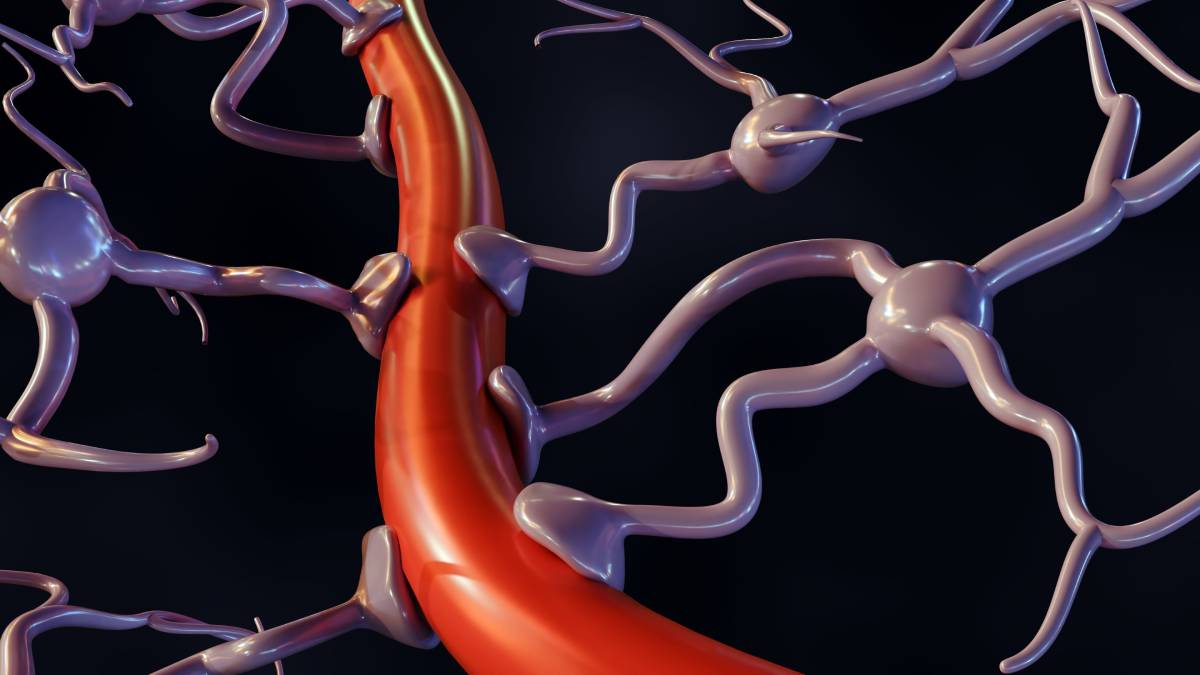
Since its introduction in 1991, functional magnetic resonance imaging (fMRI) has transformed the fields of basic and clinical neuroscience, allowing researchers to estimate how neural activity fluctuates in different brain regions.1 Despite its widespread use, the relationship between fMRI signals and the underlying neural activity remains incompletely understood. Because fMRI measures a vascular surrogate of neural activity, its interpretability depends on the integrity and consistency of neurovascular coupling. Animal studies using invasive techniques have sought to quantify neurovascular coupling, often employing a variety of different anesthetics that can differentially modulate neural and vascular responses.
Using scalp electroencephalography (EEG) and diffuse optical imaging (DOI) to non-invasively measure neural and vascular activity simultaneously, a 2010 publication investigated the effect of 6 anesthetics on somatosensory-evoked potentials (SEPs) and hemodynamic responses in 33 mice.2 Four of the studied anesthetics—Alpha-chloralose, pentobarbital, isoflurane, and propofol—are mainly GABAergic and prolong inhibitory postsynaptic currents by increasing channel conductance.3 The other two studied anesthetics, ketamine and xylazine, were not inherently GABAergic. Understanding how anesthetics influence neurovascular coupling, specifically between secondary and late neural components and the hemodynamic response, is critical for interpreting fMRI and DOI as biomarkers of cortical function.2
To assess how each anesthetic affects baseline vascular state and neurovascular coupling, the researchers measured cerebral blood flow (BFi) in all subjects. They found that isoflurane produced the highest baseline BFi, with ketamine-xylazine producing the lowest. In addition to baseline BFi, they also measured changes in BFi during hypercapnia and evaluated CO2 reactivity. Although BFi increased under hypercapnia for all rats, isoflurane demonstrated the largest BFi response, and ketamine-xylazine demonstrated the weakest. Isoflurane’s increased baseline BFi means the cortex starts in a more vasodilated, high-flow state, which amplifies the hemodynamic response when neural activity occurs. Operationally, when the rat receives sensory stimulus under isoflurane, it generates normal cortical activity, but the vascular system responds more strongly, producing a larger hemodynamic change.
On the flip side, ketamine-xylazine’s low baseline BFi limits the vascular reserve, so the hemodynamic response is muted even with the same neural activity. Therapeutically, this means that interventions which increase baseline blood flow (like isoflurane) can enhance neurovascular responsiveness, while those that depress blood flow (like ketamine–xylazine) can blunt it. This finding suggests that optimizing baseline flow will become a key target for preserving healthy neurovascular coupling.2
Somatosensory and hemodynamic responses varied markedly across anesthetics, with isoflurane and alpha-chloralose producing the largest blood flow-evoked changes, whereas pentobarbital and propofol produced large P1 signals (which are linked to weak thalamic drive) but minimal N1/P2 neural components (which reflect robust cortico-cortical processing). On the other hand, ketamine-xylazine and fentanyl showed small P1 signaling but strong late neural components, indicating different anesthetics have distinct effects on synaptic transmission and vascular responsiveness.2
In other words, pentobarbital and propofol dampen most of the downstream cortical signaling, producing weaker overall brain responsiveness, whereas ketamine-xylazine and fentanyl preserve more of this activity. Therapeutically, this means the choice of anesthetic can substantially alter how much neural communication and vascular responsiveness the brain can retain during full sedation, which may affect recovery, monitoring, and interpretation of neurophysiological signals.
This study is consistent with prior work that demonstrates cortical processing is a major determinant of vascular response,4 suggesting hemodynamic response is not solely dependent on early sensory input but can be strongly shaped by ongoing cortical activity. Anesthetics that increase baseline cerebral blood flow may amplify the vascular response to the same level of neural activity, whereas those that suppress blood flow may blunt the response. These findings highlight both anesthetic choice and vascular state can strongly influence the interpretation of hemodynamic signals and suggest that preserving or modulating cortical blood flow may improve the reliability of neurophysiological monitoring.
References
1. Bandettini P. Functional MRI today. International Journal of Psychophysiology. 2007;63(2):138-145. https://doi.org/10.1016/j.ijpsycho.2006.03.016
2. Franceschini MA, Radhakrishnan H, Thakur K, et al. The effect of different anesthetics on neurovascular coupling. NeuroImage. 2010;51(4):1367-1377. https://doi.org/10.1016/j.neuroimage.2010.03.060
3. Franks NP, Lieb WR. Molecular and cellular mechanisms of general anaesthesia. Nature. 1994;367(6464):607-614. https://doi.org/10.1038/367607a0
4. Devor A, Ulbert I, Dunn AK, et al. Coupling of the cortical hemodynamic response to cortical and thalamic neuronal activity. Proceedings of the National Academy of Sciences. 2005;102(10):3822-3827. https://doi.org/10.1073/pnas.0407789102